Executive Summary
Enterprise AI security has historically focused on protecting individual sessions: analyzing each user interaction in isolation, applying safety filters to discrete prompts, and making allow/block decisions on a per-request basis. This session-centric model creates significant blind spots that sophisticated attackers are increasingly exploiting.
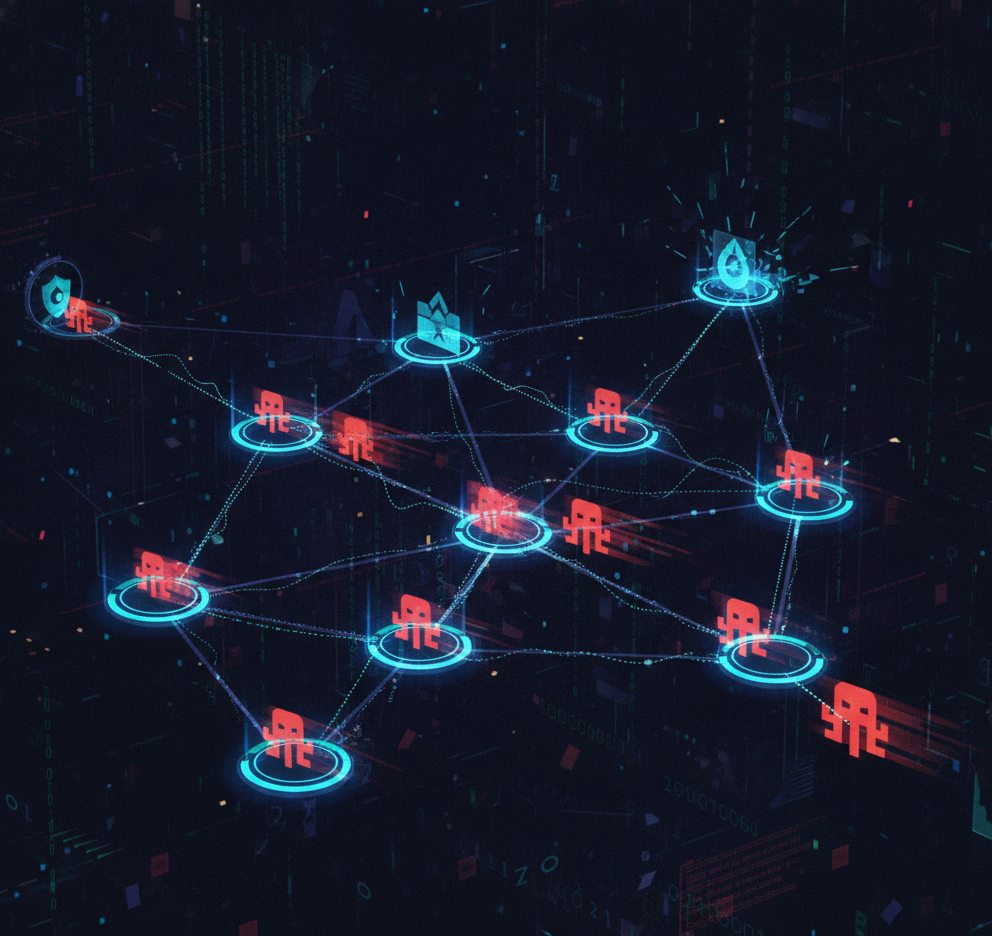
Session Hopping attacks distribute malicious activity across multiple sessions, IP addresses, user accounts, and time windows. Each individual interaction appears benign and passes security checks. Only when viewed collectively do these interactions reveal themselves as components of a coordinated attack campaign.
Anatomy of a Distributed Attack
Traditional AI security assumes that threats manifest within single sessions. Session Hopping attacks deliberately subvert this assumption.
Consider a reconnaissance campaign targeting an organization's AI systems. Rather than sending obviously probing queries from a single session, an attacker distributes the reconnaissance across dozens of sessions over several weeks. Each individual query appears to be a legitimate business question.
Temporal Distribution: Attackers spread activity across extended time periods, often mimicking normal business hours and usage patterns.
Identity Fragmentation: Using multiple accounts, IP addresses, or API keys, attackers ensure that no single identity accumulates suspicious activity.
Semantic Fragmentation: The malicious intent is split across multiple innocuous-seeming requests that only reveal their purpose when viewed together.
 aiwarden Cross-Session Defense
Our platform was designed from the ground up to detect and prevent distributed attacks through comprehensive cross-session analysis:
Session Correlation Engine: We maintain context across all interactions with your AI systems, regardless of session boundaries. We link activity by user identity, API key, IP address, behavioral fingerprint, and semantic content.
Temporal Pattern Analysis: We analyze activity patterns across time windows ranging from minutes to months. We detect unusual query volumes, suspicious timing patterns, and coordinated activity that unfolds gradually.
Behavioral Fingerprinting: Beyond simple identity tracking, we build behavioral profiles that identify entities by their interaction patterns, triggering enhanced scrutiny regardless of apparent identity isolation.
AI Intelligence Team by aiwarden
View All Articles